

Super User
How to Make Sure Your Products Pass FDA‘s Label Exam!
It is critical that you make sure your products comply with FDA’s labeling regulations because the labels are usually the first things that an FDA inspector sees when they examine your products!
How FDA Regulates Protective Face Masks Such as N95 Masks and Surgical Masks


UPDATE 05.05.20
Emergency Use Authorization for Respirators
FDA granted Emergency Use Authorization (EUA) for certain filtering facepiece respirators (“respirators”) and other personal protective equipment during the COVID-19 public health emergency. Under an EUA, FDA authorizes the distribution and use of respirators that do not comply with FDA’s registration, listing, and 510(k) premarket notification requirements.
Respirators covered by an EUA are listed on FDA’s website at:
These EUAs only apply to those respirators intended to be used by healthcare professionals.
Temporary Enforcement Policies for Surgical and Medical Non -Surgical Masks
FDA has also established temporary enforcement policies for medical non-surgical masks and surgical masks during the COVID-19 public health emergency. Surgical masks are masks used in healthcare facilities and are intended to provide protection from bodily fluids (i.e. liquid barrier protection). Masks used in healthcare facilities but which do NOT provide this liquid barrier protection are non-surgical medical masks.
FDA does not intend to object to the distribution and use of surgical and medical non-surgical masks that do not comply with registration, listing, 510(k) and certain other regulatory requirements if FDA believes use of the masks would not create any “undue risks”. For example, FDA may not object to the distribution of surgical masks if the company provides evidence showing that the products meet the appropriate performance standards (e.g. protection from blood), meet flammability requirements, and have labeling that accurately describes the products.
Protective face masks may or may not be regulated by the FDA depending on how they are intended to be used. If FDA regulates the mask, they are subject to FDA’s medical device requirements.
Devices that are intended to prevent disease meet FDA’s definition of a “medical device”. So if the mask is intended to protect its wearer from airborne pathogens such as the COVID-19 virus, then FDA regulates the product as a medical device. Medical devices must meet the following requirements:
Establishment Registration
The manufacturer, initial importer, contract sterilizer, specification developer, re-labeler, and any other establishment involved in the processing, development, or distribution of the masks must be registered with the FDA as a medical device establishment. Some of these establishments are required to pay FDA an annual user fee which is expected to increase each fiscal year.
Medical device establishment registrations must be renewed annually, and establishments that are required to pay the user fee must pay the fee each year.
US Agent for Foreign Establishments
Registered facilities in foreign countries must have a US agent. The US agent must be located in the US and receive communications from FDA and assist FDA with scheduling any inspections of the foreign facility.
Official Correspondent
The owner or operator of a medical device establishment (domestic or foreign) must designate an official correspondent for the company. For foreign companies, the official correspondent may or may not be the same entity as the US agent. FDA may contact the official correspondent for issues regarding the annual registration of the establishment and the listing of its devices. The official correspondent receives communications from FDA and must provide FDA the names of all the company’s officers, directors, and partners if FDA requests that information.
Device Listing
The manufacturer, foreign exporter, and certain other establishments are required to list their medical devices with FDA. Each listed device is assigned a device listing number. For importing a medical mask, the Customs filer/broker must declare the manufacturer’s device listing number to FDA for every shipment.
Premarket Notification (“510k”)
Surgical masks are designed to protect the wearer from bodily fluids (liquid barrier protection) and are class II medical devices requiring premarket notification to FDA, known as a “510(k)”. The 510k must show that the mask is substantially equivalent to a surgical mask already on the market in terms of safety and efficacy. Note that medical procedural masks that are intended for use in healthcare facilities but that are not intended for liquid barrier protection or use in areas where risk of infection is high, are not surgical masks and are class I medical devices that do not require 510(k) premarket notification.
Label Compliance
The product label must comply with all FDA medical device labeling requirements such as having a properly declared statement of identity, net quantity of contents, intended use and indications for use, directions, contraindications, warnings, precautions, business name and address (manufacturer, distributor, or packer), country of origin, date of issuance, and Unique Device Identification (UDI).
Good Manufacturing Practices
The manufacturer must comply with FDA’s medical device Quality System (QS) regulation and Good Manufacturing Practices (GMPs). The GMPs include requirements for the methods, facilities, and controls used in the designing, manufacturing, labeling, packing, storing, installing, and servicing of the mask products.
N95 Respirators
N95 respirators are facial protective devices used to protect the wearer from harmful airborne particles. They are regulated by the National Institute for Occupational Safety and Health (NIOSH) which is part of the Centers for Disease Control and Prevention (CDC). These respirators require NIOSH certification.
N95 respirators intended for use in industrial settings such as construction sites or factories to protect workers from dust and debris are not regulated by FDA. However, N95 respirators that are intended for medical use (e.g. use in healthcare facilities) are regulated by FDA as well as NIOSH. These N95 respirators are class II medical devices but are exempt from the 510(k) premarket notification if the respirator:
- is not intended to prevent specific diseases or infections
- is not labeled or otherwise represented as filtering surgical smoke or plumes, filtering specific amounts of viruses or bacteria, reducing the amount of and/or killing viruses, bacteria, or fungi, or affecting allergenicity.
- does not contain coating technologies unrelated to filtration (e.g., to reduce and or kill microorganisms).
Masks Not Intended for Medical Purposes
If the masks are not intended for medical use e.g. the masks are for general purpose or industrial use, then the products are not regulated by FDA. Such masks should not be labeled with any claims suggesting the masks offer protection against disease. US Customs recently advised import filers to disclaim or not transmit the entry data to FDA when filing the entries for those products.
How FDA Regulates Hand Sanitizers

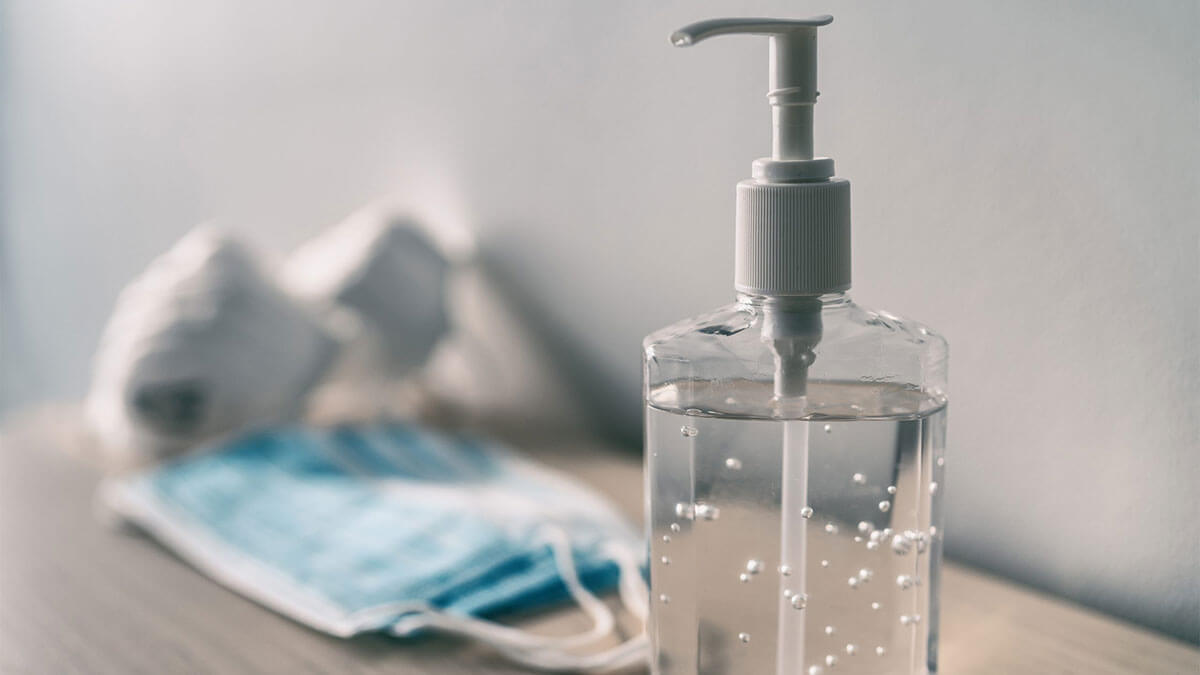
FDA regulates hand sanitizers (antiseptic hand wash products) as over the counter (OTC) drug products. They are drug products because they are used to prevent disease. Therefore, hand sanitizer products must comply with FDA’s drug regulations.
To market hand sanitizers in the US, the following requirements must be met:
Establishment Registration
Any establishment that manufactures, repacks, or relabels the hand sanitizer must be registered with FDA as a drug establishment. Companies that only import the hand sanitizers (do not manufacture, repack, or relabel the product) do not need to register with FDA. For importing the hand sanitizer, the Customs filer/broker must declare the company’s registration number to FDA when filing the entry.
Drug Listing
Registered drug establishments must list the drug e.g. hand sanitizer with FDA. Each listed drug is assigned a National Drug Code (NDC). For importing a drug, the Customs filer/broker must declare the NDC number when filing the entry.
Drug Good Manufacturing Practices (GMPs)
Drugs including hand sanitizers must be manufactured and packed under FDA’s drug Good Manufacturing Practices (GMPs). The GMPs cover the design, monitoring, and control of the manufacturer’s facility and processes to ensure the products meet requirements for identity, strength, quality, and purity.
FDA OTC Drug Monograph Requirements
The hand sanitizer product must meet FDA’s OTC drug monograph requirements including formulation requirements.
Labeling Compliance
The labels of hand sanitizers must comply with all of FDA’s drug labeling requirements which include having a properly declared statement of identity, net quantity of contents, name and place of business (manufacturer, packer, or distributor), expiration date, and a Drug Facts panel which states the active ingredient(s), uses, warnings, inactive ingredients, purpose, directions, and contact information.
Note: Due to the COVID-19 public health emergency, FDA has established a temporary policy under which the agency will not take enforcement action against companies that manufacture or compound alcohol-based hand sanitizers if they comply with certain requirements which include drug labeling requirements, establishment registration, and drug listing. In addition, this policy only applies to products that contain certain USP grade ingredients in certain concentrations and which do not contain any other active or inactive ingredients.
Please let FDA Specialist know how we can assist you in complying with FDA’s regulations for marketing or importing hand sanitizers in the US!
FDA Registration
What is FDA Registration?
Establishments or facilities that manufacture, label, package, or perform certain other operations on foods, drugs, medical devices, tobacco, or biologics are required to register with FDA. A registered facility receives a unique registration number from FDA which FDA uses to identify the firm for inspections, exams, screening of imported products, and other activities. Registration is also used to help FDA locate the source of any problem such as any harmful contamination of the products to prevent further spread or recurrence of the problem.
Information needed for registration includes the full legal name and address of the businesses, contact information (and US agent contact for foreign establishments), information regarding its products, and other information. The registration requirements and the information that needs to be submitted vary depending on the type of commodity.
Once my establishment is registered, it is considered FDA-approved? If not, what do I need to do for FDA to approve it?
Registration of an establishment does not constitute an FDA approval of the establishment. FDA does not approve establishments. FDA uses the registration information to keep track of its regulated facilities, locate the facilities in the event a problem is found in their products, and to schedule routine inspections of the facilities to determine if they are complying with FDA regulations such as good manufacturing practices (GMPs). FDA may take enforcement action against facilities/establishments if FDA finds any violations during an inspection, but FDA does not approve the facility or establishment.
Do foreign facilities need to register?
Foreign facilities are subject to the same registration requirements that FDA places on domestic facilities. For example, FDA requires both foreign and domestic facilities that manufacture, prepare, pack, or hold food for consumption in the United States to register with FDA as food facilities. As with domestic firms, FDA uses the registration information to keep track of regulated facilities and schedule inspections. FDA does routinely inspect facilities in foreign countries. Foreign facilities that do not pass an FDA inspection may be placed on an import alert under which FDA may automatically detain their shipments without requiring physical exam.
Are importers required to register?
For foods, if the importer engages in any manufacturing, processing, preparing, packing, labeling, or holding of the food for consumption in the Unites Stated, the importer must register as a food facility with FDA.
For drugs, if the importer performs any manufacturing, repacking, relabeling, or salvaging operations for distributing the drug in the United States, then the importer must register as a drug establishment with FDA.
For medical devices, if the importer is the initial importer of the devices, then the importer must register as a medical device establishment with FDA. Furthermore, if the importer relabels the product, is the specification developer, further processes the device, or sterilizes the device, then the importer must register as well.
How long does FDA Registration take?
FDA Specialist can usually complete the registration for a company within 2-3 business days if provided all the necessary information and the company completes all required steps. The timeframes for certain products may also depend on how quickly FDA can process the applications.
Who must register with FDA?
For products intended to be distributed in the United States, FDA requires registration for domestic and foreign establishments that:
- Process, prepare, pack, or hold food
- Manufacture, import (initial importer), or sterilize medical devices, or develop specifications for medical devices, or perform other operations related to the processing, development, or distribution of medical devices
- Manufacture, repack, relabel, or salvage drugs
- Manufacture tobacco products
Who submits FDA Registration?
The company may submit the registration application to FDA or authorize a third-party agent such as FDA Specialist, LLC to register its establishment or facility. For foreign establishments, the US agent the company assigns for the registration may submit the registration application.
FDA Import Requirements
What are FDA import requirements?
All imported FDA-regulated products must:
- Be manufactured, processed, packed, and held under sanitary conditions.
- Not be forbidden or restricted for sale in the country the product is produced or exported from.
- Not be adulterated (e.g. contaminated with a harmful or filthy substance or other substance prohibited by US law).
- Not be misbranded (e.g. must meet all federal labeling requirements.)
- Not otherwise be a product prohibited by federal law for distribution in US commerce e.g. unapproved drugs.
- Meet any registration, listing, and other filing requirements.
Why does the FDA have import requirements?
FDA’s import requirements help ensure that foods, drugs, cosmetics, medical devices, and other FDA regulated products are safe for use and that the products’ labeling is truthful and not misleading and correctly bears all required information such as an appropriate statement of identity, any required warning/caution statements, nutrition labeling and allergen declarations for foods, etc. FDA’s import requirements help ensure that that products are not contaminated with any harmful or illegal substances or actionable levels of filth e.g. insect fragments, mold, debris, etc. and were not manufactured, processed, prepared, packed, held, or transported under conditions that can lead to such contamination.
Who fills out the FDA import requirements?
The importer who files the entry with US Customs (the “filer”) declares the shipments to Customs, FDA, and all other pertinent federal agencies and files the required import documents with the respective agencies. Usually, this is handled by a US Customs-licensed broker. However, all parties involved in the distribution of the goods into US commerce are responsible for ensuring the goods meet all FDA and other legal requirements.
What happens if you don’t meet FDA’s import requirements?
If FDA finds any violations in imported products, the Agency may detain the shipments and require the importer to overcome the violations during a hearing period (the “detention period”) before FDA releases the products. For example, products that are not labeled in accordance to FDA’s labeling regulations may be relabeled to overcome the detention. If the goods cannot be brought into compliance with FDA law during the detention period, FDA may refuse admission of the goods and require that they be re-exported or destroyed under FDA or Customs supervision.
Companies that do not comply with FDA’s regulations may be placed on an import alert under which FDA may automatically detain their future shipments without requiring physical exam. FDA or Customs may also seize the products. Persons that violate FDA law may be subject to enforcement actions such as warning letters, injunction, debarment, monetary penalties, and criminal prosecution.
Which imports have FDA import requirements?
FDA regulates foods for human or animal use (except for meats, poultry, catfish, and certain egg products regulated by the U.S. Department of Agriculture), drugs, cosmetics, medical devices, biologics, certain electronic devices that emit radiation, and tobacco products. FDA’s regulatory requirements for imported products are the same as for domestically produced products. For example, if a color additive in a product is not allowed in a domestically produced food product, it is not allowed in an imported product even if the color additive is permitted in the country in which the product is produced.
FDA Requirements for Domestic and Imported Foods
This section details FDA’s requirements for food products. FDA’s regulatory requirements and food safety standards for domestically produced foods e.g. label requirements, permissibility of food and color additives, pesticide tolerances, filth defect action levels etc. apply to imported foods. For example, if a certain color additive is not approved for use in products manufactured in the US, it is not permitted in imported foods even if that color is permitted for use in the country of production.
Some additional legal provisions apply specifically to imported foods and food importers. For example, if the product is forbidden or restricted for sale in the country in which the product is manufactured or in the country from which it is exported, it may be refused admission into the US. As another example, FDA requires food importers to have a foreign supplier verification program (unless exempt by law) for each food they import to verify that their foreign manufactures/suppliers are meeting FDA’s food safety standards for preventing foodborne illness.
Learn more about FDA Requirements for Domestic and Imported Foods
FDA Requirements for Domestic and Imported Cosmetics
This section details FDA’s requirements for cosmetic products. FDA’s regulatory requirements for domestically produced cosmetics e.g. label requirements, permissibility of ingredients, etc. apply to imported cosmetics. For example, if a certain color additive is not approved for use in cosmetic products manufactured in the US, it is not permitted in imported cosmetics even if that color is permitted for use in the country of production.
Some additional legal provisions apply specifically to imported cosmetics. For example, if the product is forbidden or restricted for sale in the country in which the product is manufactured or in the country from which it is exported, it may be refused admission into the US.
Learn more about FDA Requirements for Domestic and Imported Cosmetics
FDA Requirements for Domestic and Imported Drugs
This section details FDA’s requirements for pharmaceutical drug products. FDA’s regulatory requirements for domestically produced drugs apply to imported drugs e.g. requirements for labeling, ingredients/formulation, doses, etc. For example, active ingredient requirements for over-the-counter drugs made in the US are the same as for imported over-the-counter drugs. Also, FDA’s drug good manufacturing practices (GMPs) apply to drug manufacturers whether they are domestic or foreign establishments.
Some additional legal provisions apply specifically to imported drugs. For example, if the product is forbidden or restricted for sale in the country in which the product is manufactured or in the country from which it is exported, it may be refused admission into the US.
Learn more about FDA Requirements for Domestic and Imported Drugs
FDA Requirements for Domestic and Imported Medical Devices
This section details FDA’s requirements for medical devices. FDA’s regulatory requirements for domestically manufactured medical devices e.g. requirements for labeling, clinical and nonclinical testing, good manufacturing practices (GMPs), etc. apply as well to imported medical devices. For example, performance testing is required for premarket approval of certain medical devices whether they are manufactured in the US or in a foreign country.
Some additional legal provisions apply specifically to imported medical devices. For example, if the product is forbidden or restricted for sale in the country in which the product is manufactured or in the country from which it is exported, it may be refused admission into the US.
Learn more about FDA Requirements for Domestic and Imported Medical Devices
Basic Steps for Importing Products into the US

New importers often ask, “what exactly are the steps needed to start importing FDA-regulated products”? Of course, the “steps” vary depending on the types of products you are importing, the country of origin, how the products are intended to be used, and many other factors. However, the basic steps for importing most products include:
Know what government agencies regulate your product.
More than one federal agency may have jurisdiction over your products. For example, FDA and USDA regulate different food products and their jurisdictions overlap in some areas as well. Your Customs broker can assist you in determining what federal agencies regulate your products. Also, foods must comply with state government regulations as well. You should know all of these requirements well in advance of importing the goods, so you have sufficient time to take any necessary actions to avoid any holds, detentions, refusals, seizures, of other problems with the clearance of your merchandise.
Find a freight forwarder.
The products’ shippers often hire the freight forwarders, but sometimes the importer does this. While some companies offer both freight forwarding and Customs broker services, these are separate operations. The freight forwarder arranges the shipment of the goods from the shipper to destination. They provide the broker the required entry documentation such as the bill of lading, commercial invoice, packing list, etc. The freight forwarder may also be the carrier (the vessel that carries the goods) or may work with a separate carrier company to deliver the goods. The freight forwarder also may arrange the storage of the goods when they make entry.
Hire a broker licensed by US Customs to file your entries.
Although you can file your own shipments (“entries”) the filing process can be very complex so for commercial shipments, most companies hire a US Customs-licensed broker to file their entries. The broker files the appropriate entry documentation with Customs and all other pertinent US federal agencies such as FDA, USDA etc. The broker determines the correct duty rates, taxes, and fees for importing the goods and pays Customs any fees required for clearance. We highly recommend hiring a broker with a lot of experience dealing with FDA-regulated products because these products are subject to a lot of unique rules and procedures. The freight forwarders sometimes provide their own Customs filing services or work with specific brokers. Sometimes importers hire their own Customs brokers. If you need assistance in finding a broker, FDA Specialist can refer the right broker for you based on the type of product you are importing and other factors.
Determine which mode of transportation is best suited for your shipments.
Considerations for the type of transportation you use to move your goods should be based on the nature of the goods, the size of the shipments, commercial value of the shipments, perishability/expiration dates, and other factors. For example, if you are shipping a product with a very short shelf-life in small quantities, you may consider shipping by air rather than by ocean freight. However, for larger shipments that do not have a short shelf life e.g. are not perishable, it may be significantly less expensive to transport by ocean vessel. When comparing costs of the different modes of transportation, be sure to factor in costs of insurance, Customs filing, freight forwarding, and inland transport in the country of origin and transport costs of moving the freight from the port of arrival to destination.
Decide where your goods will be stored when they arrive at the port of entry.
You can store the goods at your own warehouse or use a commercial third-party storage facility. Some importers rent or borrow space from other importers’ warehouses which may save on storage costs. The storages facility must meet requirements of the FDA and all other applicable government agencies such as the state and county governments agencies. The facility may be subject to FDA’s registration requirements as well.
Obtain an Import Bond
The Importer of Record is the entity responsible for ensuring that goods are imported in accordance with all federal laws and regulations. The Importer or Record is required to obtain an import bond for most shipments with a commercial value of $2500.00 USD or more. The bond helps ensure that Customs will be paid the appropriate duties, any penalty fees, and any other required fees. The Importer of Record is often the company that is importing the merchandise but may be a third party such as a Customs broker. The Customs brokers typically arrange the bond.
Of course, the above list is not exhaustive. In addition, each type of commodity is subject to different regulatory requirements. For specific information related to each type of commodity, please click on the corresponding link below:
- Foods (Including Dietary Supplements)
- Cosmetics
- Drugs
- Medical Devices
FDA also regulates foods for animal use, veterinary drugs, food contact surfaces, biologics, and radiation-emitting devices. FDA Specialist will provide more information on this website for these commodities soon!
New FDA Import Alert to Enforce the Foreign Supplier Verification Program (FSVP) Rule
08/12/19: FDA has recently published Import Alert 99-41, “Detention Without Physical Examination of Human and Animal Foods Imported from Foreign Suppliers by Importers Who Are Not in Compliance with the Requirements of the Foreign Supplier Verification Program (FSVP) Regulation”. While most of FDA’s import alerts target foreign manufacturers and shippers, this new import alert specifically targets US importers.
An importer may be added to the Red List of this import alert if FDA inspects the company and finds that it is not in compliance with the FSVP requirements for any human or animal food it imports unless that food is specifically exempt by regulation. FDA may detain, without physical examination, any foods imported by an importer identified on the Red List, for the foods identified in the list.
If the importer is unable to overcome the detention, FDA will refuse admission of the shipment and require the shipment to be re-exported or destroyed under FDA or Customs supervision. FDA may continue to detain, without physical exam, the importer’s foods until the importer successfully petitions FDA to be removed from the Red List. For more information on when and how FDA places companies and products on import alerts and how to be removed from an import alert’s Red List, click here.
FDA has already been inspecting importers of all sizes, including small companies, to ensure they are complying with the FSVP regulation and has issued citations to companies that failed to have proper FSVPs. Now that FDA has published Import Alert 99-41, it is now more important than ever for importers to ensure they have adequate FSVPs!
Contact FDA Specialist today to see how we can assist in you in ensuring you will pass an FDA FSVP inspection and avoid being placed on Import Alert 99-41!
FDA Refusals –What You Should Do If You Receive an FDA Notice of Refusal
FDA may detain an imported shipment whenever it finds a violation of the Federal Food, Drug and Cosmetic Act (“FFDCA”) via an import exam. When FDA detains the shipment, the Agency will mail a Notice of Detention (“detention notice”) to the importer and importer’s Customs broker/filer advising the importer that it has a certain amount of time (the “detention period”) to overcome the detention by providing testimony such as a private lab report or legal arguments.
After the detention period ends and if the detention is not overcome, FDA refuses admission of the shipment into US commerce. Click here for more information on FDA detentions. Now we’re going to discuss in more detail what happens when FDA refuses a shipment and how to respond to a refusal notice.
When FDA refuses the shipment, the importer and the importer’s Customs broker receive a notice of refusal from FDA and a notice of redelivery from Customs. The notice of redelivery usually indicates the importer has 90 days to export or destroy the goods or redeliver the goods into Customs Custody for the purpose of exportation or destruction.
FDA may refuse a shipment when:
- The importer fails to respond to the detention notice before the respond-by-date indicated on the notice.
- The importer fails to submit all necessary testimony before the expiration of the detention period. Importers may request an extension to the detention period but must do so before FDA issues the Notice of Refusal to the importer.
- FDA determines that the importer’s testimony is insufficient or contains errors. For example, FDA rejects a private lab report due to finding technical problems in the testing.
- The importer fails to submit an adequate reconditioning proposal. (Read our article on FDA detentions for more information on reconditioning.)
- FDA accepts the importer’s reconditioning proposal but finds that the importer failed to adequately recondition the products. For example, the importer attempted to relabel the products by placing new labels over the original labels, but an FDA investigator finds that the new labels do not sufficiently adhere to the packaging.
- The importer waives its right to submit testimony and submits a request in writing to FDA to refuse the shipment. Sometime, importers prefer to have FDA refuse the shipment before the detention period expires so they can export the goods as soon as possible.
- Note that Customs may issue an “Emergency Action Notification” (EAN), requiring immediate export of the products. Customs issues EANs when imminent hazards are found such as infestation by harmful insects.
Steps to Take When Responding to a Refusal Notice:
- Once the importer receives the refusal notice from FDA and/or the notice to redeliver from Customs, the importer should let the Customs broker know if the goods will be exported or if they will be destroyed. The broker will file the appropriate paperwork with Customs.
- The importer may contest the refusal but must be able to provide FDA compelling evidence that the agency refused the goods in error. FDA almost never accepts any private lab testimony or reconditioning proposals after it refuses the shipment.
- The importer or broker should arrange the date and time for FDA to perform the refusal verification exam.
- During the verification exam, the investigator examines the shipment, checking lot codes, expiration dates, and other identifying marks to ensure that none of the products are missing or have been substituted.
- FDA’s regulations do not require any specific methods for destroying or disposing the refused goods. FDA only requires the goods to be rendered unusable and unsalvageable. For example, the process could be as simple as running over the goods with a forklift at the importer’s facility. The importer may also use a commercial disposal or destruction facility such as a landfill operation. Of course, the destruction must comply with Environmental Protection Agency (EPA) regulations and other federal or local government requirements.
- Goods may be exported to any country as long as they comply with the laws of that country. The exportation requirement cannot be met by delivering the goods to a foreign trade zone.
Consequences for Failing to Meet the Refusal Deadline
If the importer fails to redeliver the goods into Customs custody or have the goods exported or destroyed within 90 days of the refusal, Customs may issue a notice of liquidate damages to the Importer of Record. The Importer of Record is the entity that purchases the entry bond covering the imported shipment. The bond amount may be up to three times the value of the merchandise.
Note that the “Importer of Record” is not necessarily the entity that FDA refers to as the “importer”. The Importer of Record is the entity that purchases the entry bond covering the shipment and may be located outside the US. FDA generally refers to the “Importer” as the consignee or US owner receiving the goods. This entity must be located in the United States. This sometimes creates confusion because the terms “Importer” and “Importer of Record” are often used interchangeably in the import industry. But you should be aware that the Importer of Record is the entity that receives the notice of liquidated damages from Customs.
Not all shipments require bond coverage such as shipments filed as “informal entries” with a value less than $2,500 USD. However, whether or not the shipments are covered by an entry bond or whether or not payment is made for liquidated damages, distribution of refused merchandise in US commerce is prohibited act under FDA law and may subject the importer to enforcement action such as warning letter, injunction, or even criminal prosecution.
Other Tips for Responding to an FDA Refusal:
- Do not export or destroy refused goods without first notifying FDA and Customs! Unless FDA or Customs specifically notifies you that the verification exam is waived, destroying or exporting the goods without FDA or Customs supervision may subject you to liquidated damages or civil monetary penalties and/or other regulatory actions.
- Do not wait until the last minute to arrange the verification exam with FDA or Customs. While Customs provides the importer up to 90 days to have the goods exported or destroyed, keep in mind that the investigator may need a week or more notice to arrange the exam.
- Never substitute refused goods with other merchandise such as similar products from another shipment. Substituting refused merchandise may subject you to significant enforcement action such as criminal prosecution!
- Always remember that it is much more difficult to have a refusal overturned than overcoming a detention. So try to submit all necessary testimony before the expiration of the detention period.
How to Handle an FDA Import Detention

FDA may detain an imported product if, during an import exam, FDA finds that the product appears to violate the Federal Food, Drug and Cosmetic Act (“FFDCA”). When FDA detains the product, the Agency will mail a Notice of Detention and Hearing (“detention notice”) to the importer and the importer’s Customs broker/filer advising the importer how the product appears to violate the FFDCA and that the importer has a certain amount of time (the “detention period”) to overcome the appearance of a violation by providing testimony such as a private lab report or legal arguments.
The product may be charged as adulterated e.g. contaminated with Salmonella, illegal pesticide residue, unapproved color additive, etc. Or the product may be charged as misbranded for violations such as labeling violations. The FFDCA provides FDA the authority to detain merely on the appearance of a violation, giving FDA significant power in regulating imported products. Due to this appearance standard, FDA can place a product on the “Red List” of an Import Alert after discovering a violation and then detain future shipments of the red-listed product without having to test or otherwise physically examine it. FDA refers to this as “detention without physical exam” or “DWPE”.
FDA offers an administrative detention and hearing period (“detention period”), which provides the importer the opportunity to overcome a detention by either providing FDA evidence showing that the products comply with the FFDCA or by reconditioning the product as we will discuss in further detail below.
Evidence of Compliance
If the product is detained under an Import Alert, the importer may present evidence such as a private lab report showing the product is free of the violation referenced in the Import Alert. For example, if the product is seafood detained under Import Alert 16-81 “Detention Without Physical Examination of Seafood Products Due to the Presence of Salmonella", the Importer may submit a private lab report to FDA indicating the product is free of Salmonella. Or if the importer believes FDA wrongfully charged the products, the detention period provides the importer the opportunity to contest the charges.
Reconditioning
Reconditioning a product involves treating or modifying the product to bring it into compliance with the FFDCA. For example, an importer may sterilize a product via heat treatment to kill Salmonella. Or a product may be re-labeled to overcome a labeling charge. Sometimes, FDA allows the importer to change the intended use of the product e.g. change the intended use of a product as a food to use as a non-FDA regulated product such as fertilizer. In order to recondition the product, the importer must submit a written reconditioning proposal to FDA.
If FDA accepts the importer’s reconditioning proposal, FDA will usually examine or test the products to verify that they were adequately reconditioned. For example, if the reconditioning involves relabeling the products, FDA will usually have an investigator visually examine the shipment to make sure the products were all relabeled in accordance to the reconditioning proposal.
Responding to a Detention Notice
If the importer fails to respond to the detention notice before the end of the detention period or fails to successfully overcome the violation, FDA may refuse admission of the product into US commerce and issue a Notice of Refusal to the importer. Once FDA refuses the shipment, the importer must redeliver the goods to Customs custody usually within 90 days of the issuance of the Notice of Refusal, and the importer must either have the product exported or destroyed under FDA or Customs supervision. Read our article on FDA refusals for more information.
The contact information and the respond-by-date are indicated on the detention notice. Note that the respond-by-date on the notice is not necessarily the deadline for submitting all required testimony- it’s the deadline to respond to the notice. So for example, the importer should notify FDA before the respond-by-date if the importer plans to have a private lab test the detained product. However, the lab does not necessarily have to complete the testing before the respond-by-date. The importer should keep FDA apprised of the status of the lab testing and if necessary, request an extension to the detention period.
Once FDA refuses a shipment, it becomes much more difficult to obtain a release for the shipment. That doesn’t mean that refusals are impossible to overcome, but you would need to provide very compelling evidence proving that FDA committed an error in refusing the shipment. So be sure to respond to the detention notice before the respond-by-date listed on the notice!
Other Tips:
- Telling FDA “I never received the detention notice from FDA, and that’s why I didn’t respond in time” almost never works.
- Telling FDA “I’ve imported this same product for years, and it was never detained before” also almost never works.
- FDA rarely considers hardship as a basis for release e.g. “I’ll go out of business if this shipment is refused!”
- If a shipment is detained because FDA’s lab finds an adulterant, FDA rarely accepts private lab testing as testimony for overcoming the detention.
- Read the charges listed on the detention notice very carefully so you know what specific testimony is needed to overcome the detention.
- Always remember that FDA sometimes makes mistakes! FDA reviewers must review thousands of entries each year and are subject to human error like anyone else! That is why the detention period provides the importer the opportunity to challenge the detention if the importer feels the FDA detained the shipment in error.
We at FDA Specialist have had significant success in overcoming FDA detentions and refusals. We can advise you on whether or not FDA made a mistake in detaining or refusing your shipment and then represent you before FDA to have the shipment released. Or we can inform you if any charges can be overcome via reconditioning and prepare and submit a reconditioning proposal to FDA on your behalf. So contact us right away if you receive a detention or refusal notice to see how we can assist you in getting the shipment released as quickly as possible!
FDA Import Alerts – What They Are and How to Get off Them

FDA Import Alerts – What They Are and How to Get off Them
The Federal Food Drug and Cosmetic Act (“FFDCA”) provides FDA the authority to automatically detain imported products including foods, pharmaceutical drugs, medical devices, cosmetics, tobacco products, biologics, and radiation-emitting devices due to any previous violations. Such products may be placed on a “Red List” of an Import Alert. FDA may detain red-listed products without physical exam at the port of entry. For example, if FDA tests an imported food product and finds Salmonella, FDA may detain all future shipments of that product without needing to test the product.
Read more about FDA detentions and refusals here.
Most Import Alerts list products made by specific manufacturers, but Import Alerts may also be “country-wide”, meaning that they list certain types of product made in specific countries. For example, all foods produced in China containing vegetable protein are subject to detention without physical exam (“DWPE”) under Import Alert 99-29 for melamine contamination. A country-wide Import Alert may also contain a “Green List” which includes products exempt from DWPE under that Import Alert. Of course, FDA may still perform routine, surveillance exams and testing on green-listed products and may remove a product from the Green List if any violations are found.
How to Get Off the Red List
For a company to have its products removed from the Red List of an Import Alert, the company must submit a petition to FDA, detailing how the company has identified the source of the problem and is implementing specific, corrective actions that will prevent future violations. As evidence that the problem(s) has been overcome, the company usually must present to FDA at least five consecutive shipments that are free of any violations of the FFDCA (“clean shipments”). Supporting evidence may also include monitoring records, revised Standard Operating Procedures (SOPs), third party audit reports, etc.
Common mistakes and problems that may result in the failure of an Import Alert petition:
- Corrective action plan is inadequate – In the past, simply presenting five clean shipments to FDA was often sufficient for removing a company from a Red List. However in more recent times, FDA has shifted it regulatory focus to preventative measures and thus now typically requires an Import Alert petition to detail the measures taken to resolve the conditions that led to the violation(s).
- Shipments are not of commercial-size – A company may not simply ship a small sample or split one commercial shipment into several smaller, non-commercial size shipments to meet the five clean shipment criteria. FDA has not formally established a “minimum size” for the shipments but as a rule of thumb, FDA considers a shipment to be of commercial-size if it has a value of 2,500.00 USD or more (the value at which Customs requires a shipment to be covered by an entry bond as a “formal entry”).
- Shipments are not consecutively free of violations – For example, if three shipments are found to be free of FDA violations but FDA refuses admission of the fourth shipment for any violation, then the company must start over with 5 new, clean shipments. A shipment (delivered to any importer) found to contain any violation of the FFDCA may break the chain of consecutive shipments.
- Shipments are not adequately spaced apart – FDA requires the shipments to be “routine, commercial” shipments, and thus the shipments should be adequately spaced apart. FDA has not established any specific timeframes required to separate the shipments, but requires that the shipments occur at a “reasonable” frequency to sufficiently demonstrate that the conditions that led to the violations have been resolved.
- FDA does not detain a shipment – FDA must detain a shipment for it to count as evidence supporting an Import Alert petition. However, sometimes, FDA will inadvertently release a shipment subject to an Import Alert without first detaining it, resulting in the company losing the opportunity to use that shipment as evidence to support an Import Alert petition. Therefore, the company should ensure that its importers are checking to make sure that FDA is detaining the shipments before releasing them.
Petitioning to be placed on a Green List
Product(s) included on a Green List of a country-wide Import Alert are exempt from DWPE under that Import Alert. As with Red List petitions, a Green List petition must provide assurances to FDA that measures have been taken to prevent violations from occurring. FDA generally reviews Green List petitions much more exhaustively than Red List petitions, and the company should be prepared to address any compliance concerns, even those related to problems not covered by that particular Import Alert. For example, if the company is petitioning to be added to the Green List of Import Alert 99-08 for melamine contamination, the company may be required to show that it has adequate measures to prevent microbial contamination as well.
Consequences of Being on an Import Alert
- Importers bear the cost of any private lab testing required for the release of each shipment detained under the Import Alert.
- The importer may incur significant costs related to the storage and transport of the goods needed for private lab sampling, staging of the products for FDA exam, etc.
- Importers are disqualified from participating in FDA’s Voluntary Qualified Importer Program (VQIP) if they import foods from any company listed on an Import Alert Red List.
- FDA’s Foreign Supplier Verification Programs (‘FSVP”) rule now requires food importers to approve their suppliers. When approving their suppliers, the importers must take into consideration whether or not the suppliers are subject to any Import Alerts. That doesn’t mean that importers are not allowed to import from those suppliers, but the importers must have written justification for importing from a supplier listed on an Import Alert.
- It may take several weeks or longer for a shipment to be released after detention including the time required for private lab testing, FDA review of the evidence, etc.
Don’t hesitate to contact us to assist your company in being removed from any Import Alert Red List or added to a Green List!
Richard Chiang worked for the FDA for 13 years beginning as a field investigator and entry reviewer and later worked at the FDA’s headquarters Center for Food Safety and Applied Nutrition (CFSAN)
Contact Us
Phone: (562) 882-4981
richard@fdaspecialist.com
5318 E. 2nd St. No. 198
Long Beach, CA 90803